Here you can learn about the 1846 visit to Scotland by the anti-slavery campaigner Frederick Douglass, drawing on research for this book, published in November 2018.
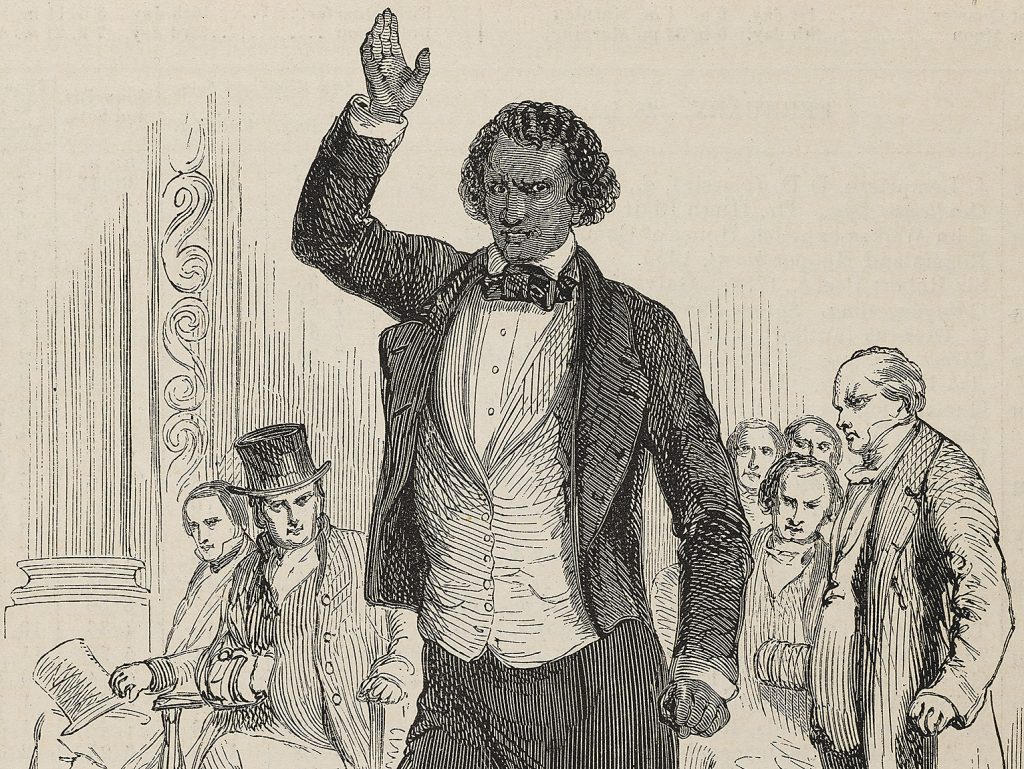
Resources here include pages on
- who he was,
- why he came to Scotland
- how he engaged with Scottish literature and history, and
- other African Americans who toured the country in the mid-nineteenth century.
There is also
- a detailed itinerary, listing all Douglass’ known speaking engagements, and
- a log of recent efforts to enhance public awareness of Scotland’s historical connections to the Atlantic slavery system and the struggle for black emancipation.
In the course of 2019, transcriptions of all the newspaper reports of Douglass’ speeches were added, supported by contextual introductions and editorial annotations.
7 comments on “Douglass in Scotland”
Can you tell me how to get a copy of this book. It doesn’t exist on Amazon
Full details of the book here: here with a link through to the publisher’s website. It is certainly listed on Amazon and many other online bookstores.
Do you know if there is any record of author George MacDonald having attended any of Douglass’ lectures? I ask because they both used the phrase “fair play” quite often (speaking of different things), but I thought maybe one had had an influence on the other. Just curious. Thanks.
I think the only way of establishing if MacDonald attended any of the lectures would be by perusing his private papers (diaries, letters), if they exist for the period. MacDonald was only 22 in 1846 and just out of university, so was probably not notable enough for his presence at a meeting to have been noted, say, in the newspapers. As for ‘fair play’, it was a very common expression (try a search for the phrase in Google Books for the 19th century) and I wouldn’t have thought it counted as credible evidence of influence of the one over the other.
I’ve just stumbled on this site. It’s fascinating! My interest in Frederick Douglass relates to his supposed attendance at the church on South College Street in Edinburgh. I’m trying to find evidence that he was actually there but keep drawing blanks. Even his own autobiography doesn’t mention this church by name.
That’s interesting. When you say ‘supposed attendance’ where did you hear of it? I have not come across any reference anywhere that suggests he attended or spoke at a church on South College Street, but of course I may have missed something. Is this the building you mean: https://www.trove.scot/place/74106?tab=details ? The record here has it as a ‘United Presbyterian Church’ and if it existed before 1847 then it would have been a Relief Church or a United Secession Church when Douglass was in Edinburgh, and most of the churches he spoke at were of one or other of these denominations.
On looking at my notes, I see that on my own website – the page that details Douglass’ appearance at McGilchrist’s Church on Rose Street on 28 April 1846: https://www.bulldozia.com/douglass-in-scotland/speaking-engagements/edinburgh-28-april-1846/ – that meetings had also been booked at ‘College Street Church’ for 30 April. In fact the document I quote from, “Free Church Alliance with Manstealers”, carries two reports of meetings there – on ‘Wednesday Evening, April 29’ and ‘Thursday Evening, April 30th’. But neither report suggests that Douglass addressed either meeting. You can read this document here: https://archive.org/details/freechurchallian00wrig/page/52/mode/2up. Douglass’ next appearance on the platform was at a public breakfast at the Waterloo Rooms on the morning of Friday 1st of May.